A beginner's guide to D&D dice
How the seven dice in a D&D set work, how to read them, and what to buy first if you are new to the table.
Affiliate disclosure. This guide contains affiliate links. If you buy through them, we may earn a commission at no extra cost to you. Read the disclosure.
A new Dungeons & Dragons group usually meets the dice before it meets the rules. Someone tips a little bag onto the table, seven shapes come out, and the person who has never played is asked to roll the big one. This guide is that moment, slowed down: what each die is for, how to read it, and what is worth buying first.
If you would rather start with a boxed game and no character sheet, the notes on board games for two players are a shorter evening. If you want stories to steal from once the dice make sense, try fantasy books for new game masters.
The seven dice, and what they are for
A standard roleplaying set has seven dice. The number after the “d” is how many faces it has. In D&D you add a modifier from the character sheet to some of these rolls, and you compare the total with a target number.
| Die | Faces | A typical job in D&D |
|---|---|---|
| d4 | 4 | Damage for a dagger or a small spell |
| d6 | 6 | The familiar cube. Fireballs, many weapons, a lot of monster damage |
| d8 | 8 | Longswords, and a good many cantrips and class features |
| d10 | 10 | Heavy weapons, and one half of a percentage roll |
| d12 | 12 | Greataxes, and a few class features that want a wide swing |
| d20 | 20 | Attack rolls, ability checks and saving throws |
| Percentile | two d10s | The rare table that asks for a number from 1 to 100 |
The d20 is the one you will roll most often. You are usually hoping for a high number. On an attack roll, a natural 20 — the face, before any bonus — is a critical hit, and a natural 1 misses. Ability checks and saving throws are not treated the same way at every table, and the rule has changed between editions. Ask the person running the game before you assume a 20 succeeds at anything.
Some rolls use advantage or disadvantage: two d20s, keep the higher or the lower. You can do that with two twenty-sided dice, or by rolling one of them twice. A second d20 is the first extra die worth owning.
How to read a roll
Most dice are read from the top face, the one sitting flat and looking at the ceiling. If two players can both see it, call the number and leave the die where it landed until the DM nods. Scooping it up mid-argument is how friendly tables become less friendly.
The d4 is the awkward one. Some print the result on the upper point. Others print numbers along the base, and you read the one that is the right way up. A set is consistent with itself. If the first roll is confusing, agree the method once and keep it for the evening.
Percentile dice are two ten-sided dice used as a pair. One die is the tens, the other is the units. A 7 and a 1, with the 7 designated as tens, is 71. Two zeros are 100, not zero. Some tens dice are marked 00, 10, 20 and so on, which makes this obvious. If both of yours are marked 0–9, say which colour is the tens before you throw them.
Leave a die where it falls until everyone who needs the number has seen it. Reading it aloud is part of the roll.
A die that lands cocked, leaning on a book or a miniature, is rolled again. Do not take the angle you prefer.
What to buy first
Buy one complete set of seven before you buy anything pretty. You want a colour you can read in the light you actually play in. Cream numbers on a dark die, or black numbers on a pale die, beat a beautiful swirl that turns into camouflage at two metres.
That is the whole of the first purchase. A character does not need a matched set for every damage type, and a new player does not need metal. If the group meets again, a second set in a different colour is the useful upgrade: one colour for the attack, another for the damage, so you are not sorting a pile of identical dice.
Leave gemstone, metal and dice with raised numbers until you know the game has stuck. They are a pleasure, and they are also how a table gets scratched. More on that below, and on the gaming accessories shelf as those guides are written.
Materials, edges and noisy tables
Opaque plastic is the ordinary material, and ordinary is a compliment. It is light, it is cheap to replace, and a lost d4 is an annoyance rather than a small grief. The failure mode is contrast. Hold the die at arm’s length under a warm bulb before you commit to a colour.
Resin sets are the next step. The faces are often sharper, the numerals clearer, and the weight a little more serious. Sharp edges are exactly what you do not want bouncing on a polished table. A folded cloth or a tray is the grown-up companion to a sharp set.
Metal dice feel wonderful and they announce themselves. They also dent soft wood, chip other dice, and make a noise that fills a quiet house. If you love them, roll them into something. A folding tray is the least theatrical solution. A dice tower is a different object — fun, bulky, and easy to leave at home.
Balance is the question everyone asks and almost nobody needs to worry about for a kitchen-table game. A die with a visible bubble, a chip, or a face that will not sit flat should be retired. A die that has rolled three twenties in a row is having a night, not revealing a manufacturing scandal. Casino-grade precision is a different hobby.
Looking after a set
Keep them in a bag or a box. Loose dice in a coat pocket find the gaps in sofas and the washing machine, and the d4 is always the one that goes. A small cloth bag is enough. Label it if you share a table with three other people who also own “the black set”.
Ink wears off the cheapest dice. A worn numeral is a reason to replace a die, not a reason to argue about what it might have said. If you want to refresh a single face, test any pen on a die you are willing to lose. Some inks never dry on that plastic.
Wash a grubby set in warm water with a drop of washing-up liquid. Skip the dishwasher. Skip boiling water. Both can warp a cheap die, and neither improves the odds.
Where to go next
Once the dice are familiar, the rest of the evening is the game: a situation, a choice, a roll, a consequence. The RPG shelf is where those guides will gather. Until then, a boxed two-player game is a good way to learn what your group actually enjoys arguing about, and a novel from the fantasy books list is a good way to fill the week between sessions.
The sets compared at the end of this guide are starting points, not a ranking of brands. Read the drawbacks. Then check the current details on Amazon, because this page will not try to guess the price.
The picks
These are the products named in this guide. We don’t list prices, because they change. Each button opens Amazon.co.uk in a new tab.
| Compare | Opaque seven-dice starter set | High-contrast resin set | Folding dice tray |
|---|---|---|---|
| Best for | A first set for a new player | Anyone who already plays in dim light | Metal dice, or a table you would rather not dent |
| Advantages |
|
|
|
| Drawbacks |
|
|
|
| Amazon | Check price on Amazon for Opaque seven-dice starter set (opens in a new tab) | Check price on Amazon for High-contrast resin set (opens in a new tab) | Check price on Amazon for Folding dice tray (opens in a new tab) |
Best for A first set for a new player
Opaque seven-dice starter set
One of each die from a d4 to a d20, sold as a single set. This is the usual first purchase.
Advantages
- Covers every die a D&D character sheet asks for
- Inexpensive enough to keep a spare in the bag
Drawbacks
- Low-contrast colours are hard to read across a table
- The cheapest moulds sometimes have bubbles or soft edges

Best for Anyone who already plays in dim light
High-contrast resin set
The same seven dice, with light numerals on a dark body or the other way round, so the result is obvious.
Advantages
- Easier to read at arm's length and by lamplight
- A clear step up once you know you will keep playing
Drawbacks
- Costs more than a basic opaque set
- Sharp edges can mark a bare wooden table
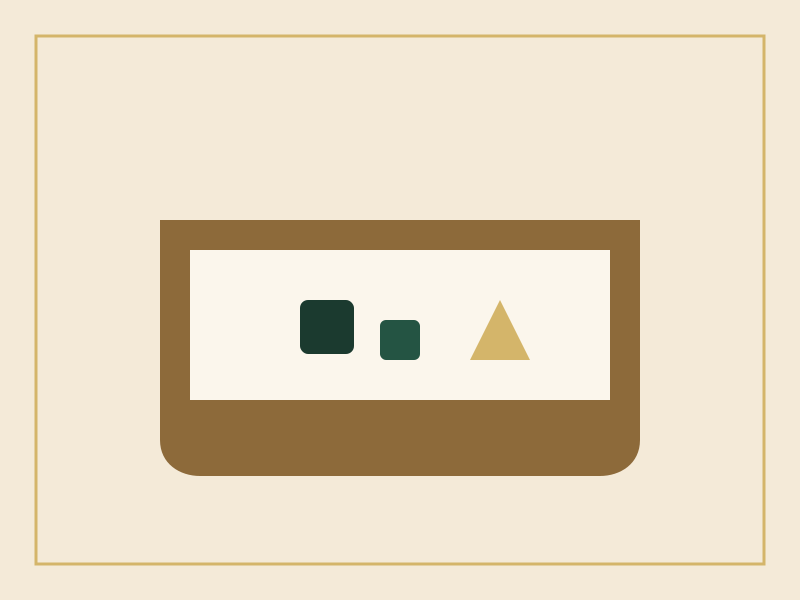
Best for Metal dice, or a table you would rather not dent
Folding dice tray
A small tray, often leatherette and fold-flat, that keeps a handful of dice on the table and off the floor.
Advantages
- Stops dice skating into miniatures, drinks and the carpet
- Folds away, so it earns a place in the bag
Drawbacks
- A tiny tray cannot hold a big handful of damage dice
- One more object to forget on the way out